Check before the meal
Photograph a meal, label or menu and review likely ingredients and preparation. Confirm uncertain details with the person who prepared the food.
“What should I ask about the sauce and portion?”
Hara for ulcerative colitis
By Hara Health · Updated
Quick answer: Hara is an ulcerative colitis diet app for checking meals, logging symptoms and revisiting your own food history. Its AI helps you compare dishes and meal ideas using the information you share. Bring those records to your dietitian or GI team; food tolerance and symptom logs cannot confirm whether UC inflammation is controlled.
AI food guidance and self-recorded history. Your care team directs UC treatment.
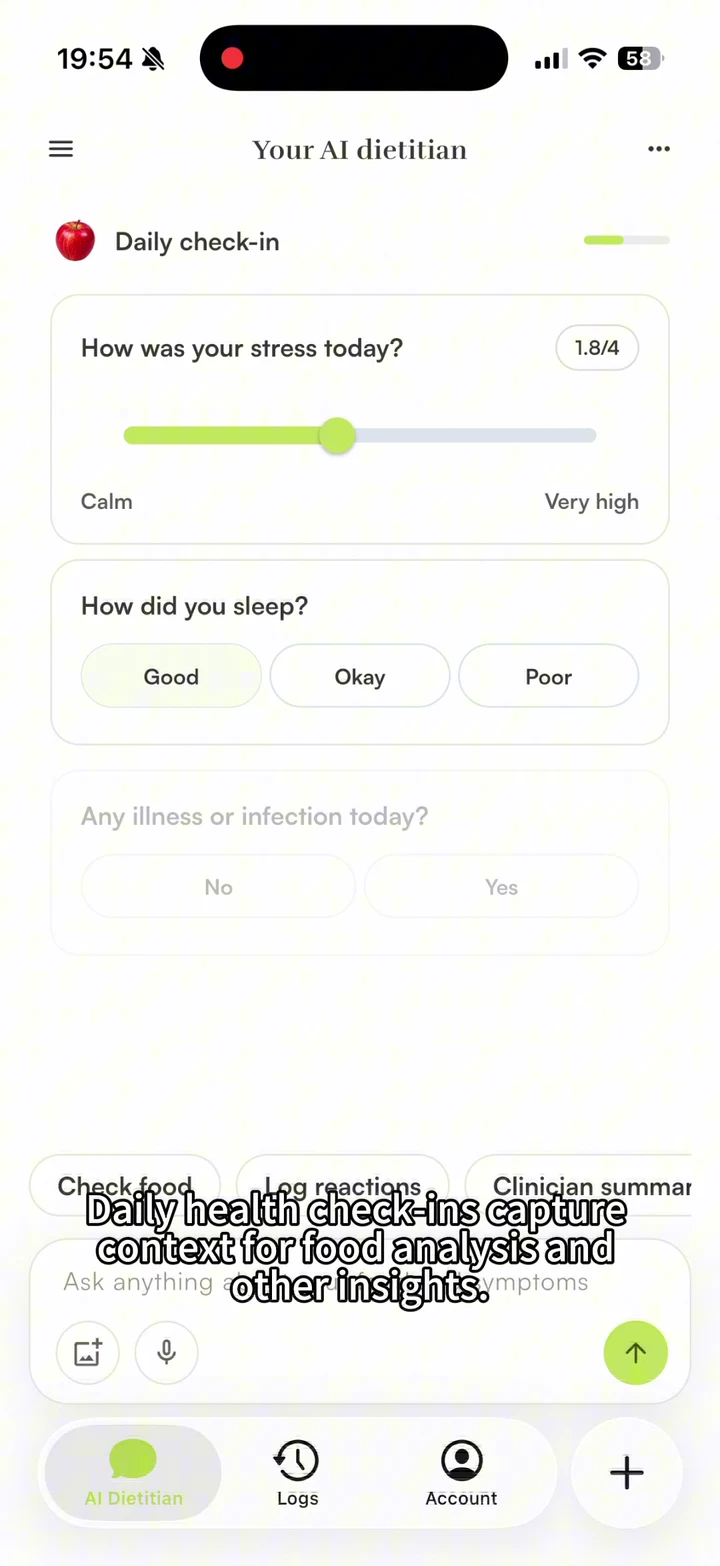
A practical workflow
“Lunch upset my stomach” is hard to compare with last week. The meal, portion, timing and symptoms you actually noticed give you and your care team a clearer starting point.
Photograph a meal, label or menu and review likely ingredients and preparation. Confirm uncertain details with the person who prepared the food.
“What should I ask about the sauce and portion?”
Save what you ate and roughly how much. Add any reported urgency, bowel changes or other symptoms, with timing. Record no noticeable symptoms too.
“Small lunch at noon; urgency later in the afternoon.”
Retrieve similar meals and look for differences in portion, preparation and daily context. A single difficult meal is a question to investigate.
“Show my notes for similar lunches, including good days.”
Ask for a summary of a chosen period and check it against your records. Share selected information through Care Portal or bring a report to the visit.
“What changed since my last appointment?”
On a small screen, scroll the table sideways.
| Your question | What to record | What needs professional input |
|---|---|---|
| Why did the same lunch feel different? | Portion, preparation, timing and what you noticed afterward. | Whether the pattern is meaningful or another explanation needs evaluation. |
| Am I avoiding more and more foods? | Foods you still eat and changes in your usual meals. | Whether restrictions are affecting nutrition and what to reintroduce, if appropriate. |
| Have my bowel symptoms changed? | Your own description of changes and when they started. | Whether a flare, infection or another cause needs testing or treatment. |
Keep the context
A useful UC record includes ordinary meals and uneventful days. An empty day in the app means no record, not that you felt well.
There is no single diet that suits everyone with UC. The Crohn’s & Colitis Foundation’s nutrition guide explains why plans should reflect individual needs. Hara can organize food questions; your clinical team decides which dietary changes or investigations are appropriate.
For food variety and day-to-day planning, read our everyday UC diet guide. For a careful way to compare experiences, see building a personal UC pattern log.
Useful answers
Hara supports meal, label and menu checks; food and symptom records; personal-history retrieval; and meal ideas using the information you share. You can prepare reports and share selected records with your care team.
Hara can help you review possible associations in your recorded meals and symptoms. It cannot prove a food caused symptoms or inflammation, and it cannot guarantee that a food will be tolerated.
No. Food and symptom records do not confirm inflammatory activity or remission. Ask your IBD team about new or worsening symptoms and any assessment you need.
This page focuses on UC food questions: meal details, bowel-symptom context, food variety and follow-up. The IBD overview introduces the shared workflow for both Crohn’s disease and ulcerative colitis.
Build a record you can revisit when you have another food question.