UC nutrition priorities
This is a long-term nutrition framework. If symptoms are worsening today, use the separate flare-day eating guide and your clinical action plan.
Scroll sideways to read every column.
| Priority | Practical starting point | Important limit |
|---|---|---|
| Enough food | Build meals around a carbohydrate, a protein and foods you can currently manage. | A short “safe foods” list may not meet your needs over time. |
| Dietary variety | Include different foods and preparation methods within your individual plan. | A varied pattern can need adjustment for a medical restriction. |
| Fluids | Keep drinks accessible; discuss increased losses or difficulty drinking with your team. | Food choice alone does not resolve dehydration. |
| Nutrition review | Mention falling appetite, weight changes or excluded food groups. | An app cannot determine a deficiency from meal photos. |
| Personal context | Note what you ate and the circumstances around a repeated concern. | Symptoms after a meal do not establish inflammation. |
What eating pattern is recommended for UC?
AGA’s 2024 expert review recommends a Mediterranean-style pattern for overall health when there is no contraindication: varied produce, lean proteins, complex carbohydrates and unsaturated fats, with fewer highly processed foods. That is a general direction, not a promise of remission or a requirement to eat a food that conflicts with your medical plan.
The same review notes that no diet has consistently reduced flare rates in adults with IBD. Food can support nutrition and symptom management while prescribed treatment and medical monitoring address the disease.
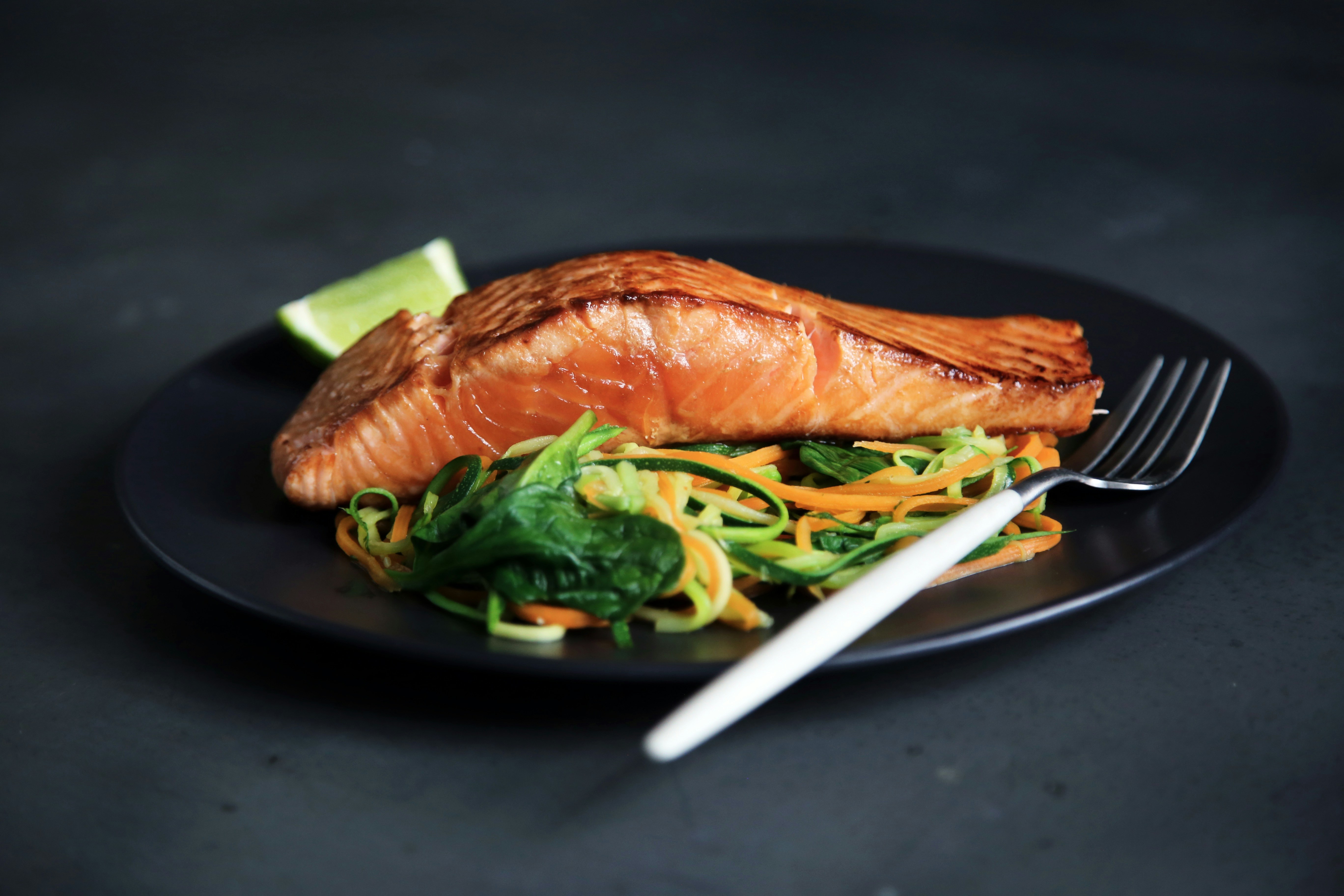
Build meals with room to adjust
Use familiar components as a starting point: a protein such as eggs, fish, chicken or tofu; a carbohydrate such as rice, potatoes, oats or bread; produce in a form you manage; and a suitable amount of fat. These are examples, not a prescribed menu or a ranking of foods.
If texture matters for you, consider preparation before removing an entire category. A cooked or blended option and a raw option are different eating experiences. Discuss persistent difficulty with your dietitian, particularly if you have a stricture, surgery-related needs or another condition that changes your plan.
For actual dishes, see nine recipe ideas with portions and methods. The breakfast, lunch and dinner collection offers a separate way to plan a day.
Which foods do people with UC need to avoid?
A diagnosis alone does not create one forbidden-food list. The Crohn’s & Colitis Foundation distinguishes foods associated with unpleasant symptoms from inflammation. A recurring discomfort is worth discussing, but one difficult meal cannot tell you what caused a disease flare.
Do not automatically remove dairy, gluten or all fibre because an online list labels them unsuitable. Keep diagnosed allergies, coeliac disease and clinician-directed restrictions in place. For a suspected personal pattern, use a food profile that records portions, preparation and context.
Crohn’s & Colitis UK notes that there is no need for everyone to limit fibre. If a temporary restriction is part of your plan, ask when and how to review it rather than assuming it should last indefinitely.
When to ask for a nutrition review
NIDDK explains that UC symptoms can reduce appetite and make it difficult to get enough nutrients. Tell your team if you are eating less, losing weight without trying or relying on an increasingly narrow range of foods.
Ask whether you need an IBD-focused dietitian or a review of nutrition-related blood tests. Avoid choosing supplements or a major elimination diet from an app score alone. Your needs depend on the clinical picture and the foods you are actually eating.
Use Hara for the everyday decision
Hara connects menu, meal-photo and label checks with the history you record. You can log a reaction or a meal without noticeable symptoms, retrieve comparable entries and review the surrounding sleep, stress or gut-state context.
Use this as a way to organize a food question. Confirm ingredients and preparation, and take medical or nutrition concerns to your team. For choosing a tool, see the IBD app comparison; for discussing records, use the GI visit summary guide.
When food adjustments are not enough
Contact your care team for new or worsening symptoms, falling intake or unintentional weight loss. Heavy bleeding, severe pain, ongoing vomiting, high fever or dehydration need urgent attention. Follow the clinical plan rather than waiting to see whether another menu change helps.
Frequently asked questions
Is there one best diet for ulcerative colitis?
There is no single menu that fits every person or disease stage. General nutrition guidance is a starting point; your clinical needs, tolerance and any therapeutic diet determine the details.
Should everyone with UC eat a low-fibre diet?
No. Fibre restriction is not a universal UC rule. If your clinician recommends changing fibre or texture, ask about the reason, duration and review plan.
Can food tracking replace my UC treatment?
No. Tracking helps organize meals and symptom context. It does not replace prescribed treatment, assess inflammation by itself or establish a nutritional deficiency.
Sources and editorial notes
Sources checked October 18, 2026. Hara Health publishes this guide and makes Hara. The examples are editorial illustrations, not patient outcomes or clinical tests of the app.
Add your own context to food choices
Check a meal, keep a record of what follows and bring the relevant history into the next decision.
For help putting this record into practice, explore Hara’s ulcerative colitis diet app and its meal checks, personal-history review and care-sharing workflow.