Ask about this portion
Check a meal, ingredient label or menu. Include the amount you plan to eat, how it is prepared and any preferences you want Hara to consider.
“Compare these lunch options and their sauces.”
Hara for irritable bowel syndrome
Hara is an AI dietitian app for everyday IBS diet management. Its agentic AI helps you check food, log reactions, retrieve relevant meals and plan your next meal. Comprehensive data from your portions, preparation, symptoms, sleep, stress and preferences gives those questions personal context.
Food guidance for daily decisions, alongside your professional care.
Keep the details that change the question.
The food, the amount, the preparation and the day around it.
Everyday IBS diet management
Hara helps you organize the details behind a food question and carry them into the next decision.
Check a meal, ingredient label or menu. Include the amount you plan to eat, how it is prepared and any preferences you want Hara to consider.
“Compare these lunch options and their sauces.”
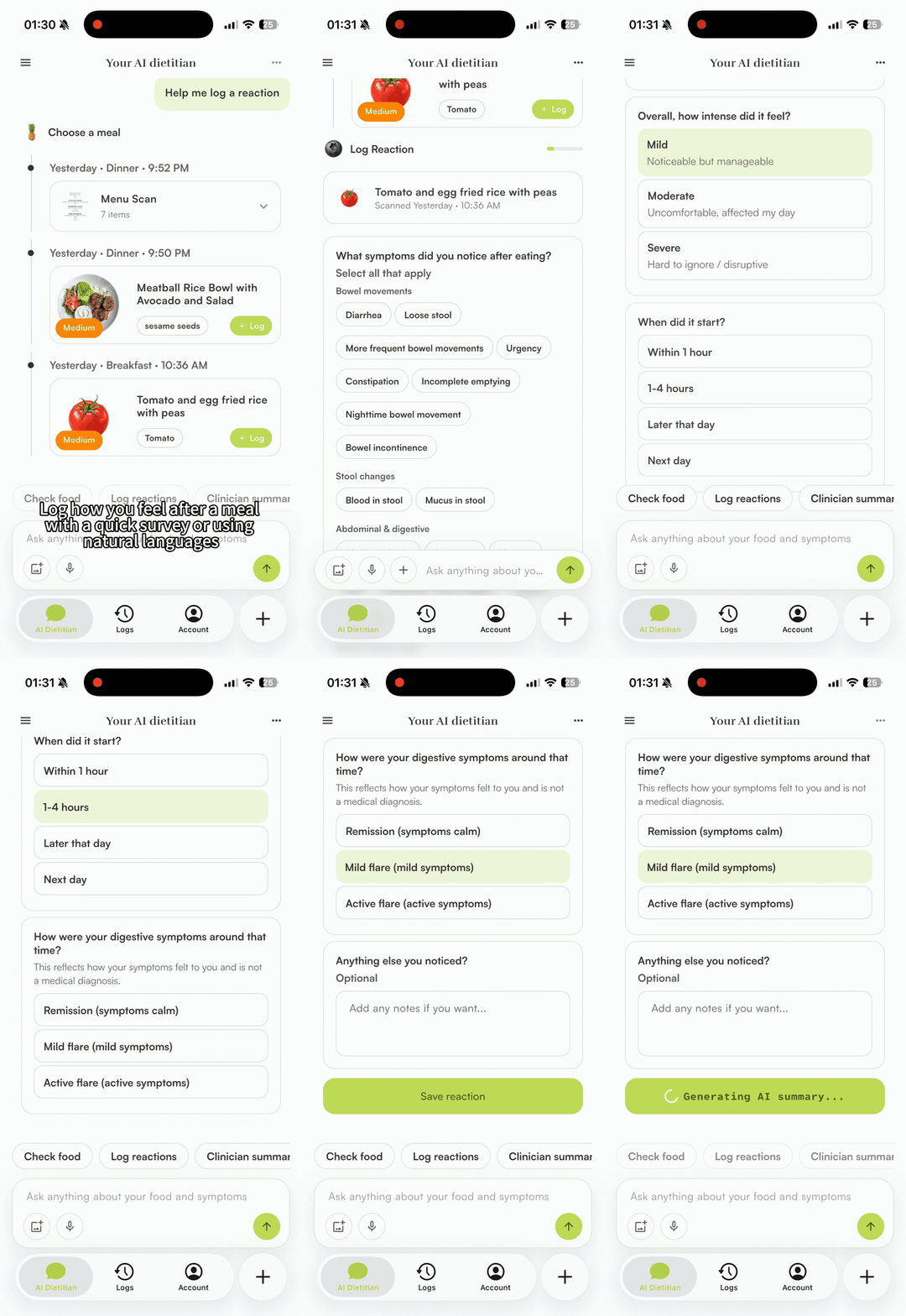
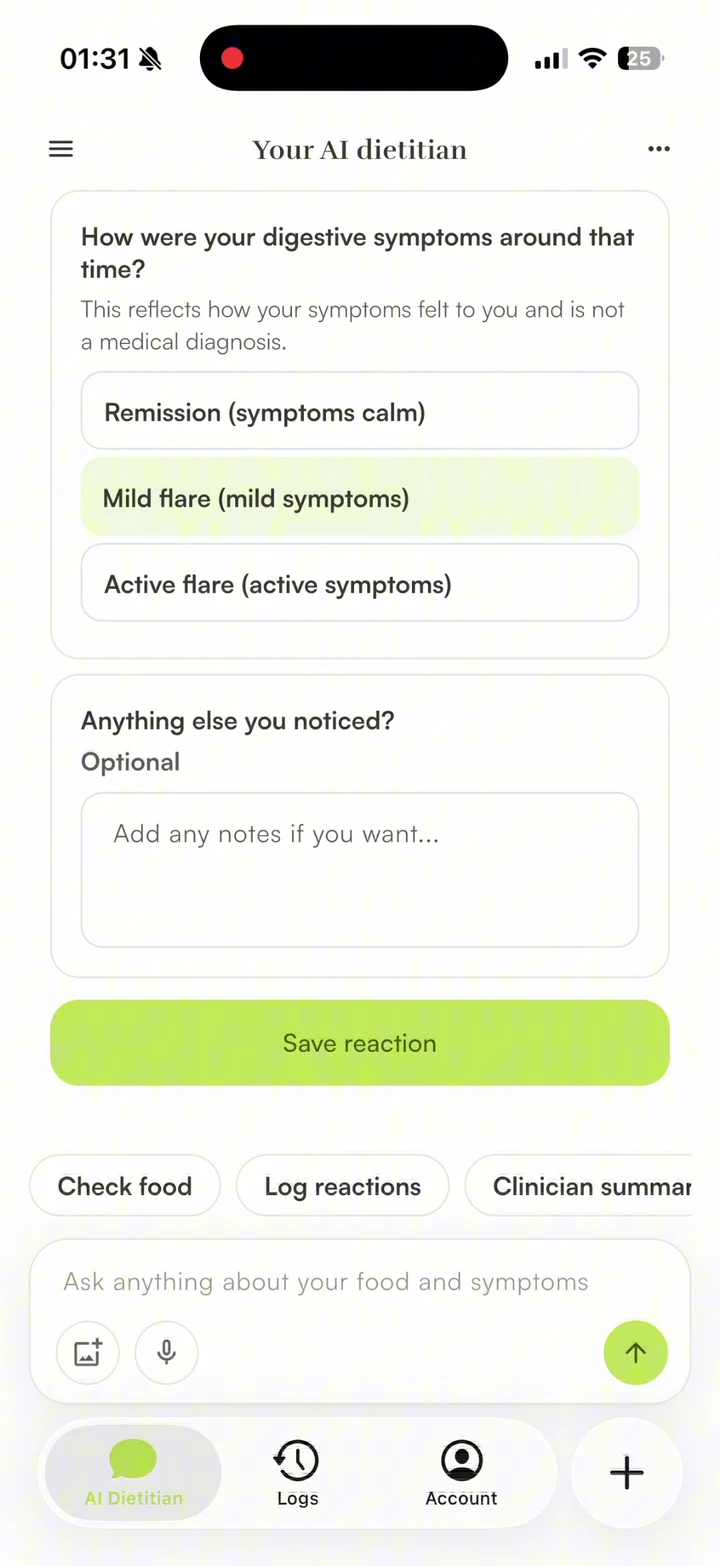
Log symptoms and timing, along with meals that felt fine. Add sleep or stress in your check-ins so your food history has more context.
“I had bloating later, and I slept poorly last night.”
Ask Hara to retrieve similar meals. Look at the recorded portion, preparation and symptoms before deciding what to discuss with your dietitian.
“Show me the times I ate this without symptoms.”
Turn your preferences and logged experience into recipe suggestions, meal-prep ideas and a grocery list. Review the options against your care plan.
“Suggest three lunches from foods I usually tolerate.”
Inside the Hara app
Check ingredients, revisit recorded context and ask for meal ideas—all in the same app.
Swipe to explore. Tap any screen to enlarge.
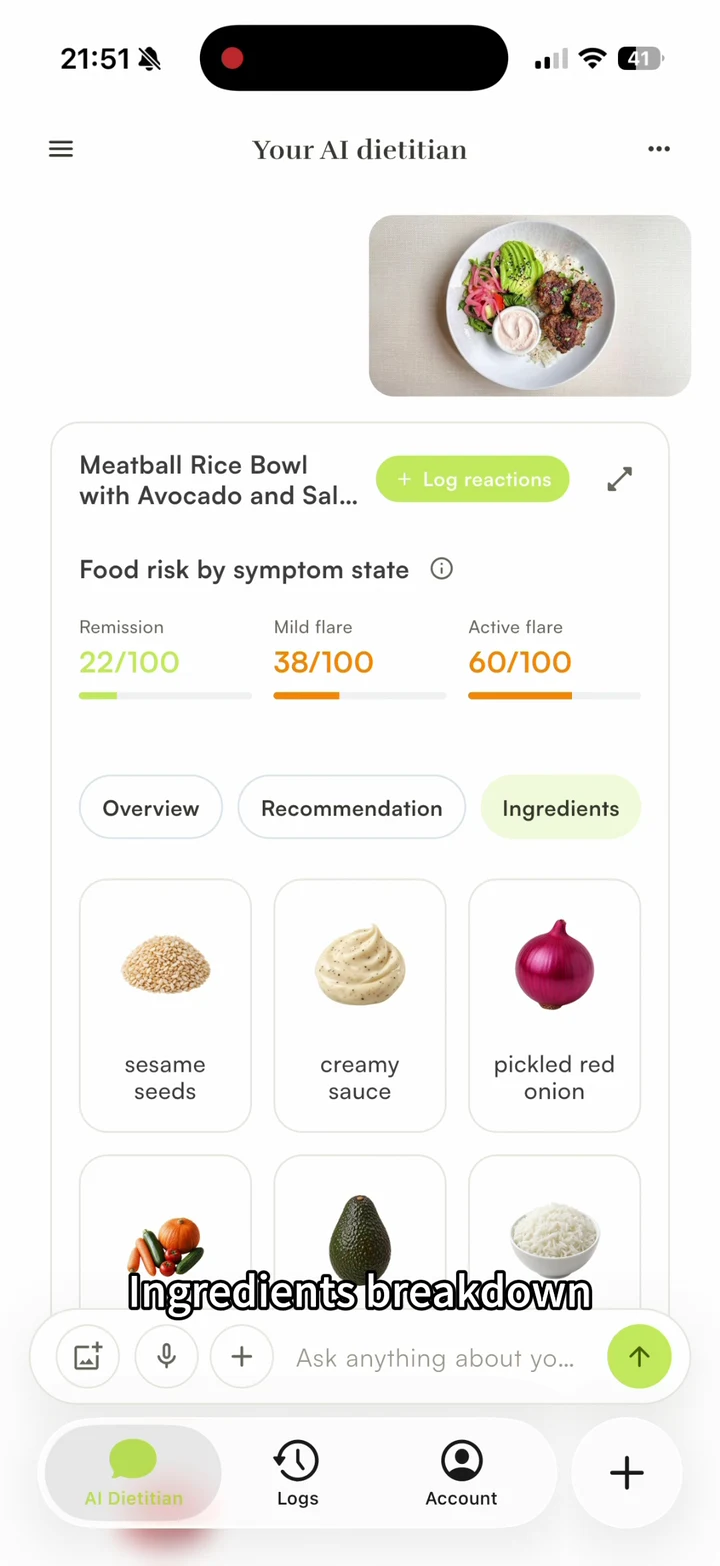
Review the ingredients and preparation behind a food check.
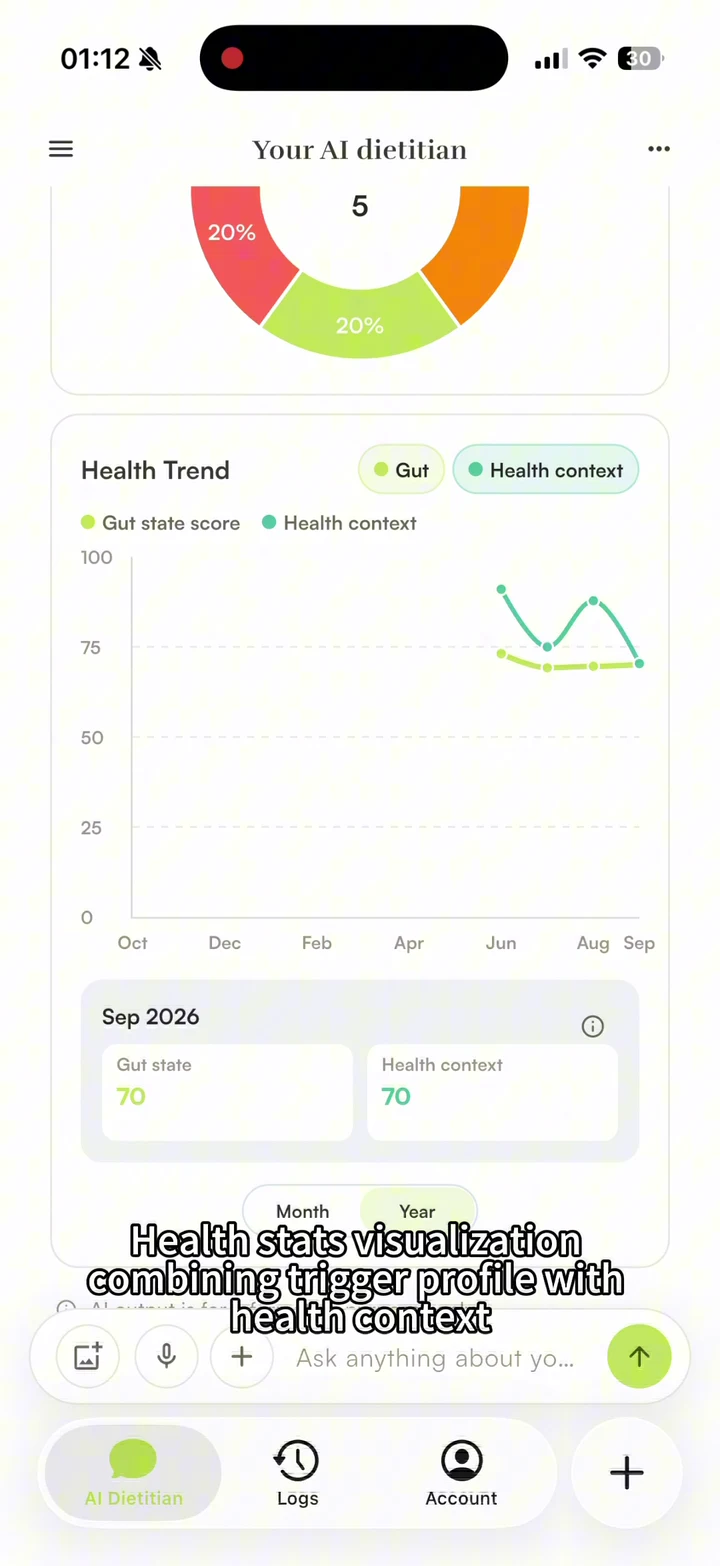
Review the context in your records across time.
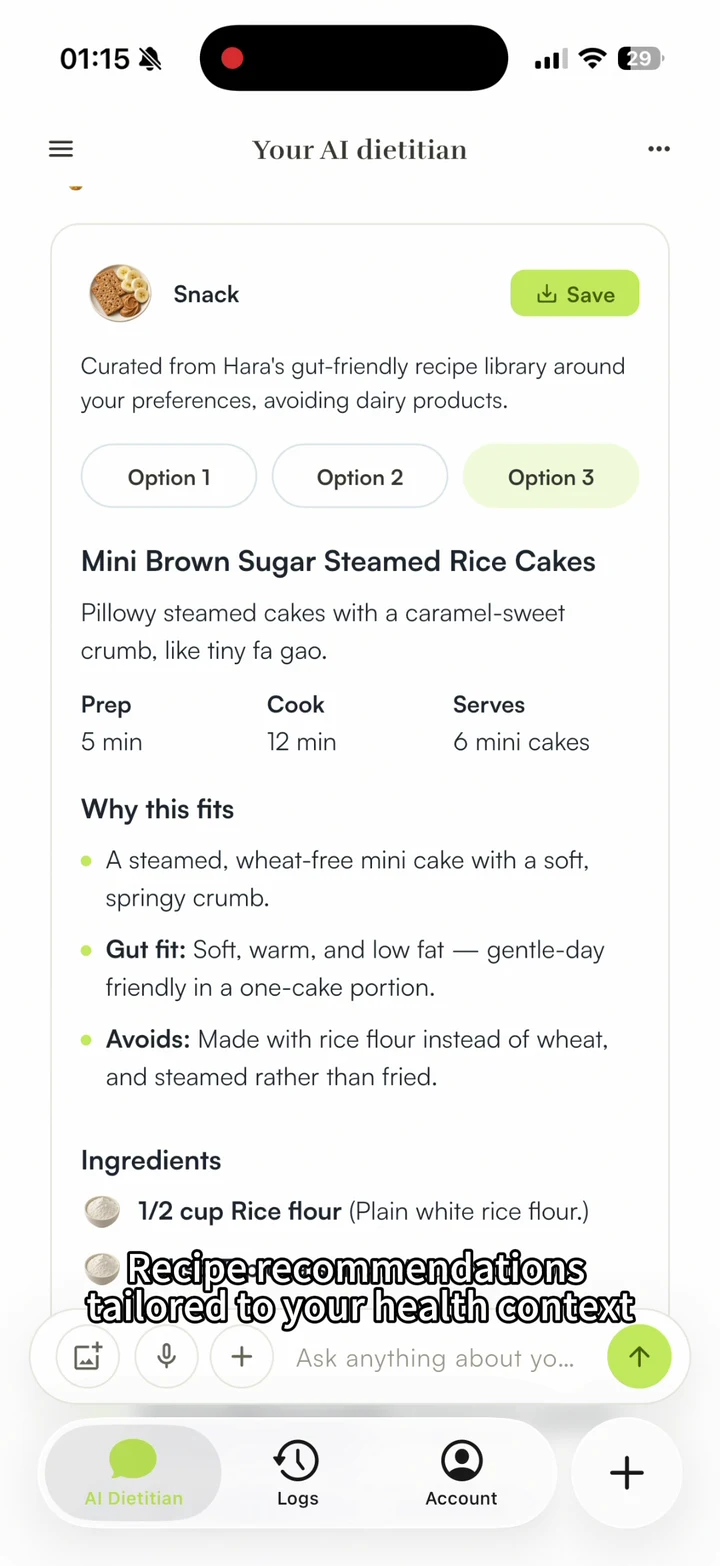
Ask for recipe options that reflect your preferences.
Screens from Hara’s product demo. Tap a screen to enlarge. Examples illustrate the app workflow, not clinical results.
Comprehensive data for your next decision
Hara connects the meals, portions, reported reactions, daily check-ins and dietary preferences you share. Sleep and stress add context when recorded. That is what comprehensive data means here.
A missing entry is not a symptom-free day. More detail can help frame a question, but it does not establish which ingredient caused a reaction.
Explore Hara’s agentic workflow →A plan you can discuss
IBS dietary changes vary by person. The NIDDK recommends working with your doctor and, when appropriate, a dietitian. If a low-FODMAP approach is suggested, discuss the trial and food reintroduction with them.
Use Hara to record your experience, organize questions and share selected records through the Care Portal. Your dietitian can review the meals and context you make available.
Explore a flexible IBS meal-prep approach →A few useful answers
Hara helps connect food checks, reactions, personal-history retrieval and meal planning. It uses your recorded context to support everyday choices. It is an AI app, not a registered dietitian, and does not diagnose or treat IBS.
No. Meal and symptom records can show associations worth discussing, but they cannot prove a cause or guarantee that a food will be comfortable. Hara helps you retrieve the details and compare experiences rather than treating one meal as a definitive answer.
You can record meals and reactions, share your dietary preferences, and organize questions for your dietitian. Hara’s food estimates are not laboratory-verified FODMAP measurements. Follow your professional plan for restriction, testing and reintroduction.
The app connects food questions with personal records for both audiences, but IBS and inflammatory bowel disease are different conditions. For Crohn’s disease or ulcerative colitis, see our IBD diet management page and keep treatment decisions with your clinical team.
Start with a food question, then keep the experience you want to remember.