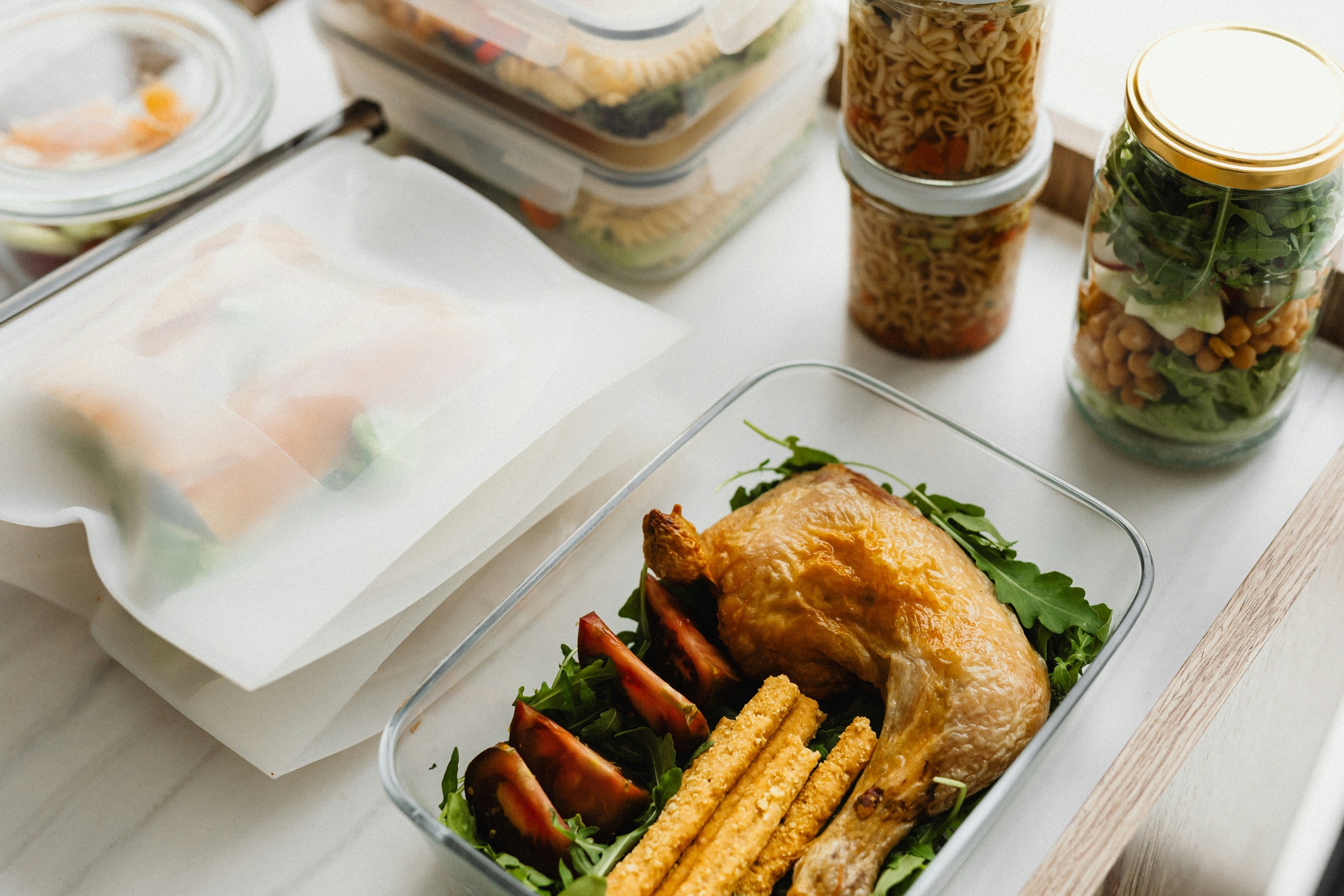
By Tuesday, the lunches that felt like such a good idea on Sunday can start to feel like evidence against you.
Maybe you packed chicken, brown rice, roasted vegetables, and a salad because it sounded balanced. Then the bloating, urgency, constipation, or cramps showed up at work—and now you are tempted to label the entire meal a mistake.
That reaction makes sense. But one difficult lunch does not automatically mean you have found a permanent “bad food.” With IBS, the meal, portion, preparation, timing, stress level, sleep, cycle, and your starting symptom level can all matter. A more useful goal is not to make your food list smaller. It is to make weekday meals easier to adjust and easier to learn from.
Start with a modular lunch, not a perfect recipe
Instead of cooking five identical, fully loaded meals, prep a few separate building blocks:
- One familiar base: rice, potato, oats, pasta, or another carbohydrate you already tend to tolerate.
- One protein: eggs, plain chicken, fish, tofu, or another option that fits your preferences.
- One produce option: cooked or raw only if it works for you; keep texture and portion realistic.
- One flavor element: sauce, seasoning, cheese, herbs, or a dressing you can add separately.
This makes a meal flexible. If Tuesday is a higher-symptom day, you can choose the simpler base and protein. If you feel steady, you can add the produce or flavor component you want to observe. The point is not to make every meal bland. It is to avoid changing five variables at once.
For people trying a clinician- or dietitian-guided low-FODMAP approach, ingredient swaps and portion sizes matter; the approach is designed to be temporary and followed by reintroduction, not used as a lifetime list of forbidden foods. NIDDK and Monash FODMAP both emphasize individualized planning.
Use the “one new thing” rule
A work lunch is usually not the best place to test a large bowl of several ingredients you have not had recently.
If you want to see how a food fits your routine, change one meaningful variable at a time:
- Keep the meal base and protein familiar.
- Add one item in a modest portion.
- Note how it was prepared and when you ate it.
- Repeat on another ordinary day before drawing a conclusion.
That is especially useful for ingredients often bundled together in “healthy” meal prep—such as garlic, onion, beans, cauliflower, large servings of cruciferous vegetables, and high-fiber grains. It is possible that one, several, or none are relevant for you. It is also possible that the portion, overall meal load, or a non-food factor was the bigger signal.
If a food feels unpredictable, read our guide to why the same food can trigger symptoms sometimes. It offers a five-variable check before one rough day becomes a permanent ban.
Prep for a lower-capacity day
A useful meal-prep plan has a “lighter lift” version already in the fridge or freezer. That might be a familiar soup, a plain grain-and-protein combination, toast with an egg, or another meal you personally find manageable.
This is not a prescription for what everyone with IBS should eat. It is a way to reduce decision pressure when you are tired, stressed, short on time, or already symptomatic.
You can also freeze one or two portions rather than relying on the same lunch all week. Monash’s current meal-planning guidance includes batch-cooking and freezing as practical options, while still encouraging variety and planning around individual needs. Monash FODMAP
Track the context, not just the ingredients
When a lunch goes badly, record enough context to make the next choice clearer:
- What and roughly how much you ate
- Whether the meal was freshly cooked, refrigerated, or frozen
- Your symptoms before eating and afterward
- Sleep, stress, activity, menstrual-cycle timing if relevant, and medication changes
- Whether the meal was rushed, unusually large, spicy, fatty, or eaten with caffeine or alcohol
In Hara, use check → log → retrieve → compare: check a meal before you commit to it, log what happened, retrieve similar meals and days, then compare the context. That is more informative than asking an app—or yourself—to declare a food universally safe or unsafe.
Keep nutrition in the picture
Restriction can quietly become the whole plan. If your list of tolerated meals keeps shrinking, you are avoiding major food groups, or eating enough is becoming difficult, bring that pattern to a GI clinician or registered dietitian.
The American College of Gastroenterology notes that low-FODMAP work can be complex and is best supported by a trained GI dietitian. ACG clinical guideline
For people with IBD, meal planning can still be useful, but symptoms alone do not show whether inflammation is active. Dietary changes should not replace clinical care or IBD treatment. Our IBD and UC menu ideas are a separate practical starting point for gentler everyday meals.
When to get medical help
Contact a clinician promptly for blood in stool, unintentional weight loss, persistent vomiting, fever, signs of dehydration, severe or worsening pain, or symptoms that wake you from sleep. Also seek support if food fear, restriction, or symptoms are making it hard to work, travel, or maintain nutrition.
A meal-prep routine should give you more options—not fewer. Start with familiar building blocks, make one change at a time, and let repeated real-life observations guide the next lunch.
FAQ
Is low-FODMAP meal prep right for everyone with IBS? No. A low-FODMAP approach may help some people with IBS, but it is not intended as a permanent or universal diet. Discuss it with a clinician or GI dietitian, particularly if you already have a restricted diet.
Are leftovers an IBS trigger? Leftovers are not automatically a trigger. If you notice a pattern, log the meal, storage time, reheating, portion, and your surrounding context before concluding that leftovers themselves are the cause.
What is the easiest way to start IBS meal prep? Prepare two or three familiar components separately, then assemble lunches with only one new or uncertain ingredient at a time.