What makes Hara’s AI agentic?
In Hara, agentic means connecting tools and recorded context across a food-related task: check something you might eat, log what happened, retrieve relevant history and plan a next step. The useful part is how one step informs the next.
You choose what to share and review the guidance. A missing detail, incorrect meal recognition or incomplete history can change an answer.
Scroll sideways to read every column.
| Step | Your request | Hara’s role |
|---|---|---|
| Check | “Compare dishes on this menu.” | Consider ingredients, preparation, preferences and relevant recorded reactions. |
| Log | “I felt bloated after lunch.” | Help record the meal and the reaction details you provide. |
| Retrieve | “How did similar meals go?” | Bring relevant food and symptom records into the current question. |
| Plan | “Help me plan tomorrow’s lunch.” | Suggest recipes, meal-prep options and a grocery list to review. |
What “comprehensive data” includes
For Hara, comprehensive data is the combination of information you choose to record: meals, portions and preparation; symptoms and their timing; daily check-ins, sleep and stress; and your dietary preferences.
A meal followed by no symptoms is useful context too. An unlogged day, however, is simply unknown. This is a personal record, not a complete clinical history or a measurement of intestinal inflammation.
The NIDDK describes a food diary as one way to discuss possible symptom associations with a doctor. Hara adds ways to retrieve and use those records in a new food question.
Inside the Hara app
See the data behind the workflow.
Reaction details and daily check-ins give the next food question more context.
Swipe to explore. Tap any screen to enlarge.
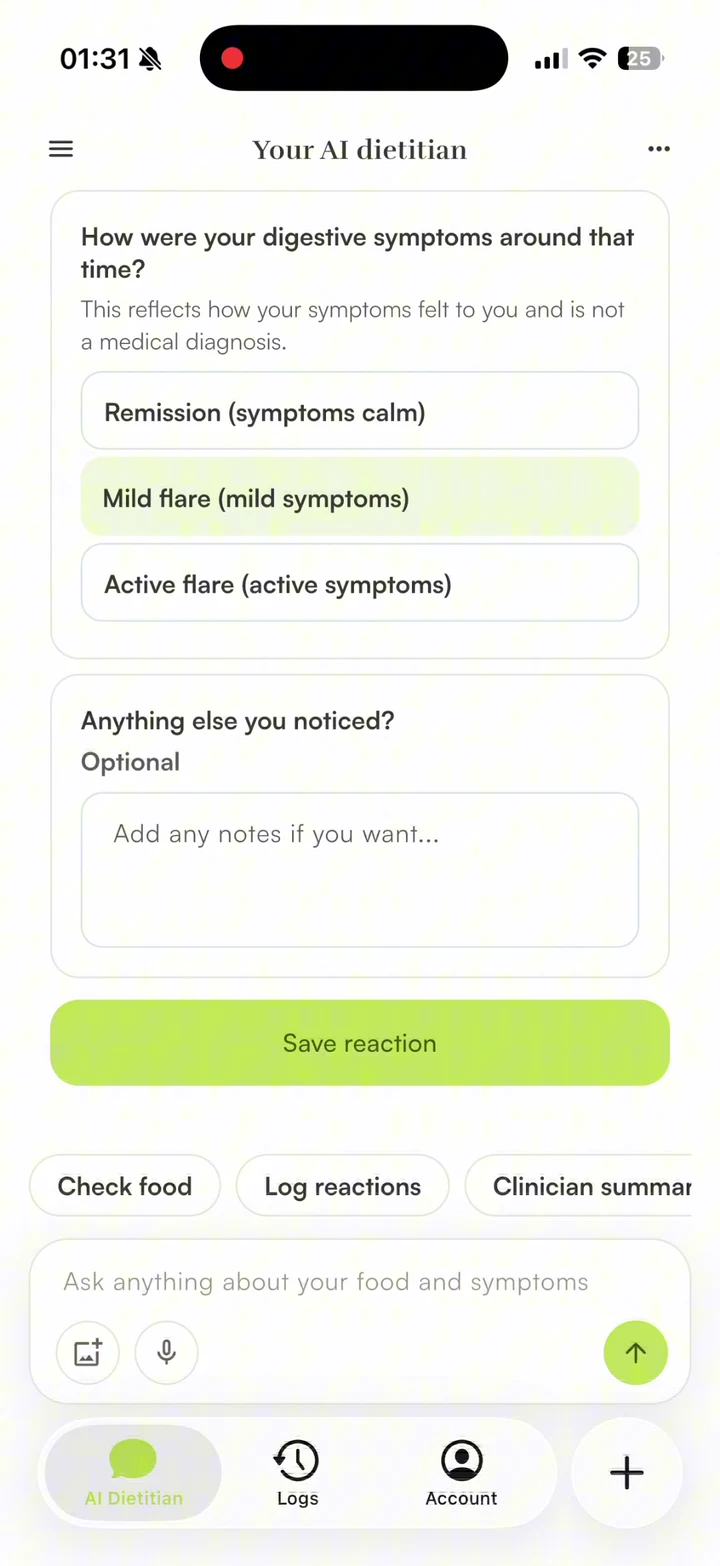
Keep the reaction details
Record how you felt, when it happened and your own notes.
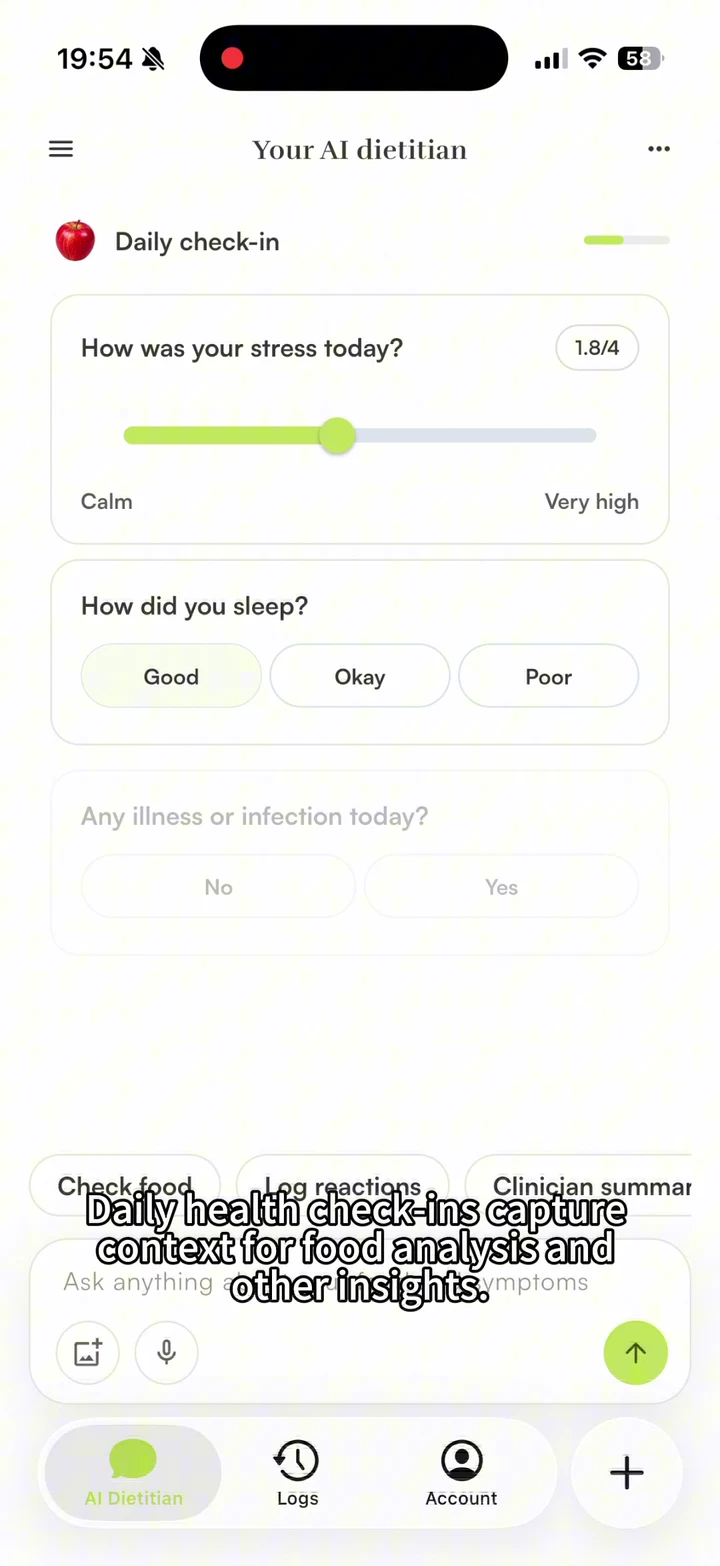
Add your daily context
Record sleep, stress and other context alongside your meals.
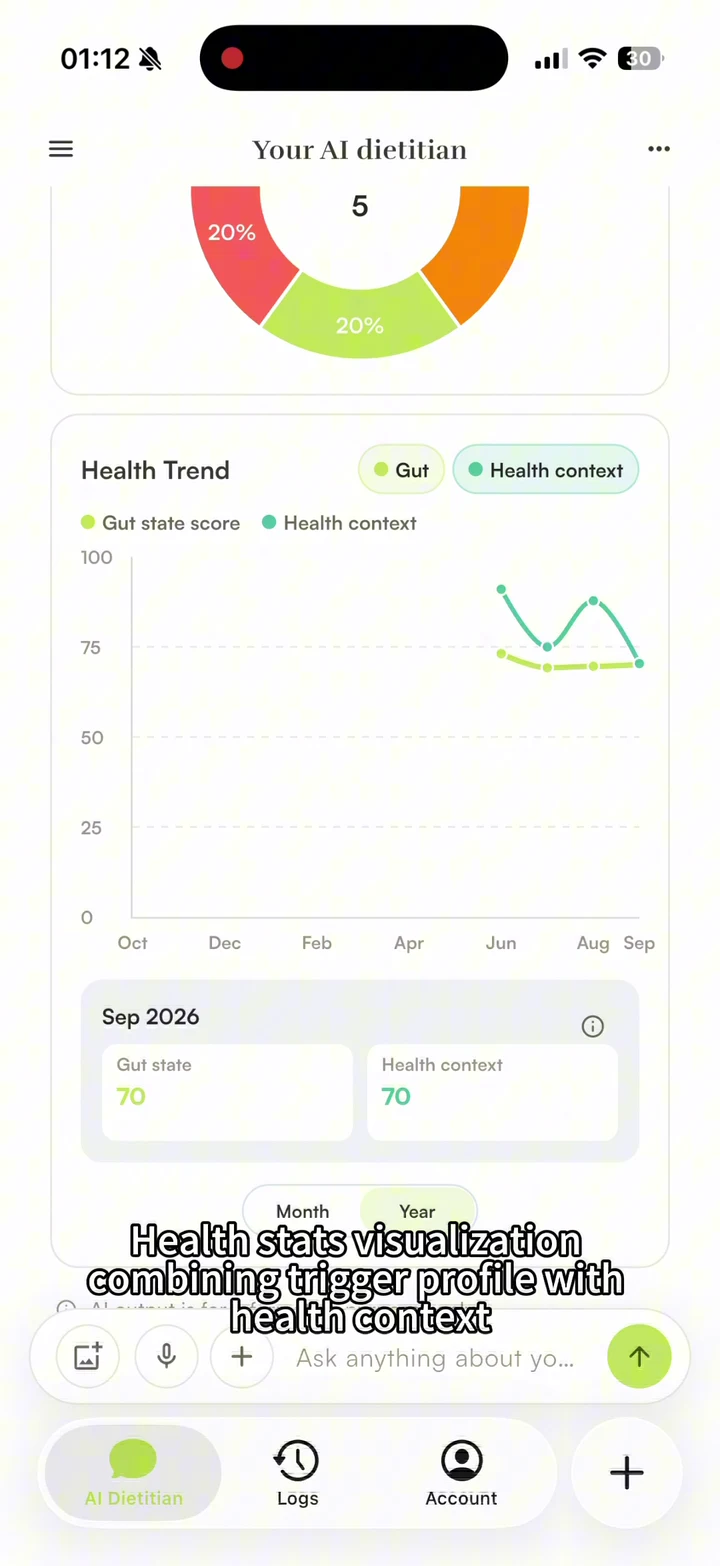
Revisit your recorded history
Review the context in your records across time.
Screens from Hara’s product demo. Tap a screen to enlarge. Examples illustrate the app workflow, not clinical results.
A day in the workflow
Billy is a composite example of someone living with ulcerative colitis. This illustrates a workflow, not a patient outcome.
Before lunch: compare the menu
Billy shares a restaurant menu and asks which dishes to consider alongside his preferences and past meals. He can ask about ingredients, preparation or a smaller portion, then check the details with the restaurant.
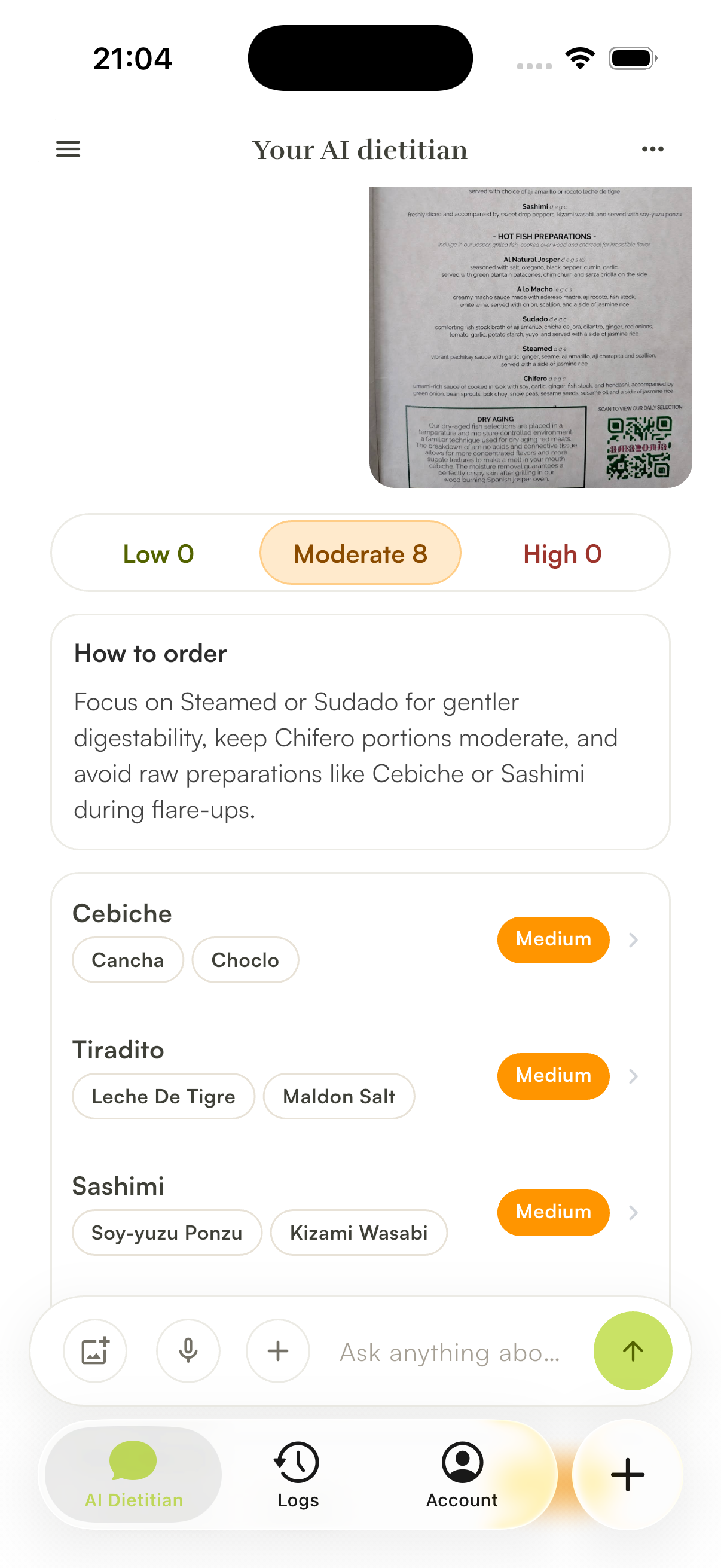
After lunch: keep the relevant details
Billy logs what he ate, the amount and how he felt afterward. If he reports a symptom, he includes its timing and severity. A daily check-in can add sleep and stress context.
Before another decision: retrieve past experience
Later, he asks Hara to find similar meals, including those that felt comfortable. He reviews what was recorded and what is missing before deciding which questions to bring to his dietitian.
Turn the record into a next-meal plan
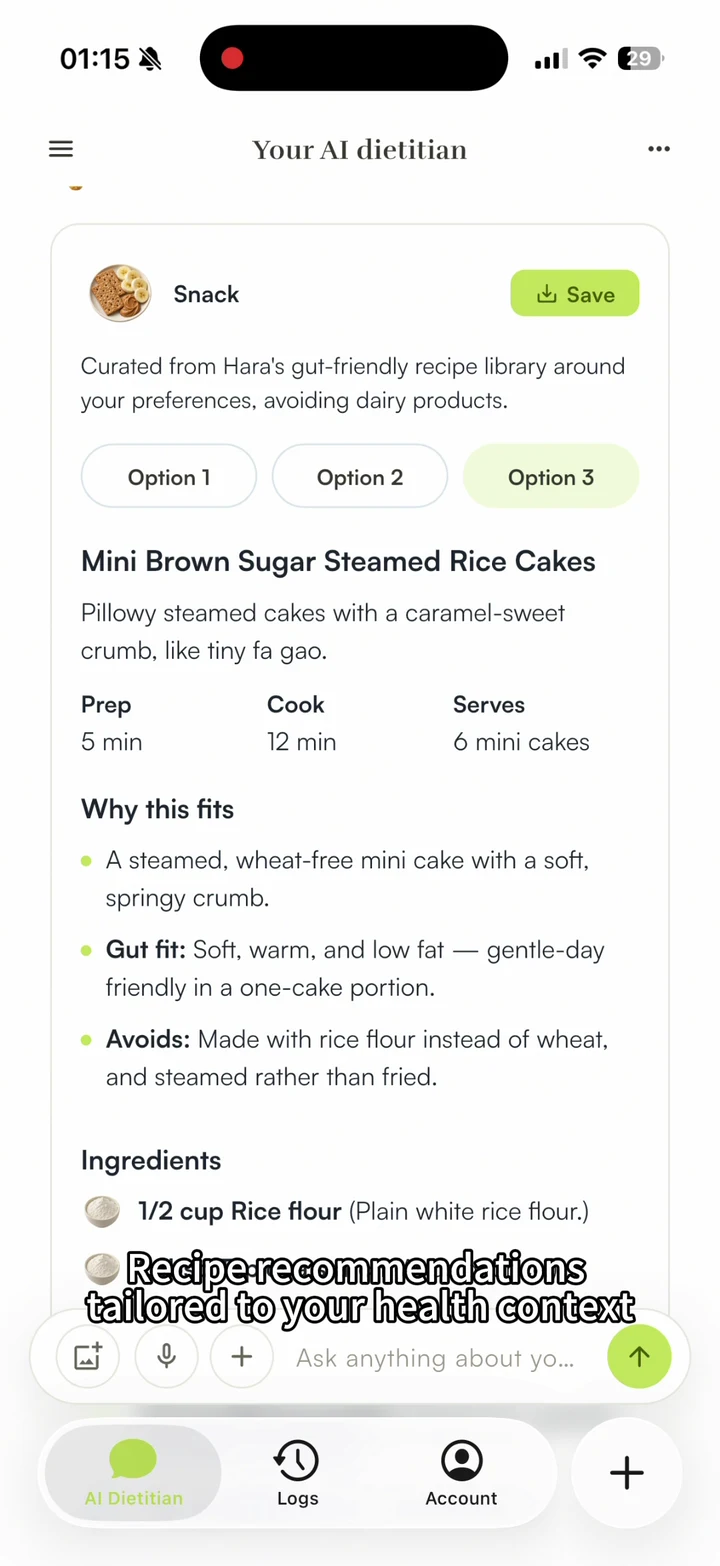
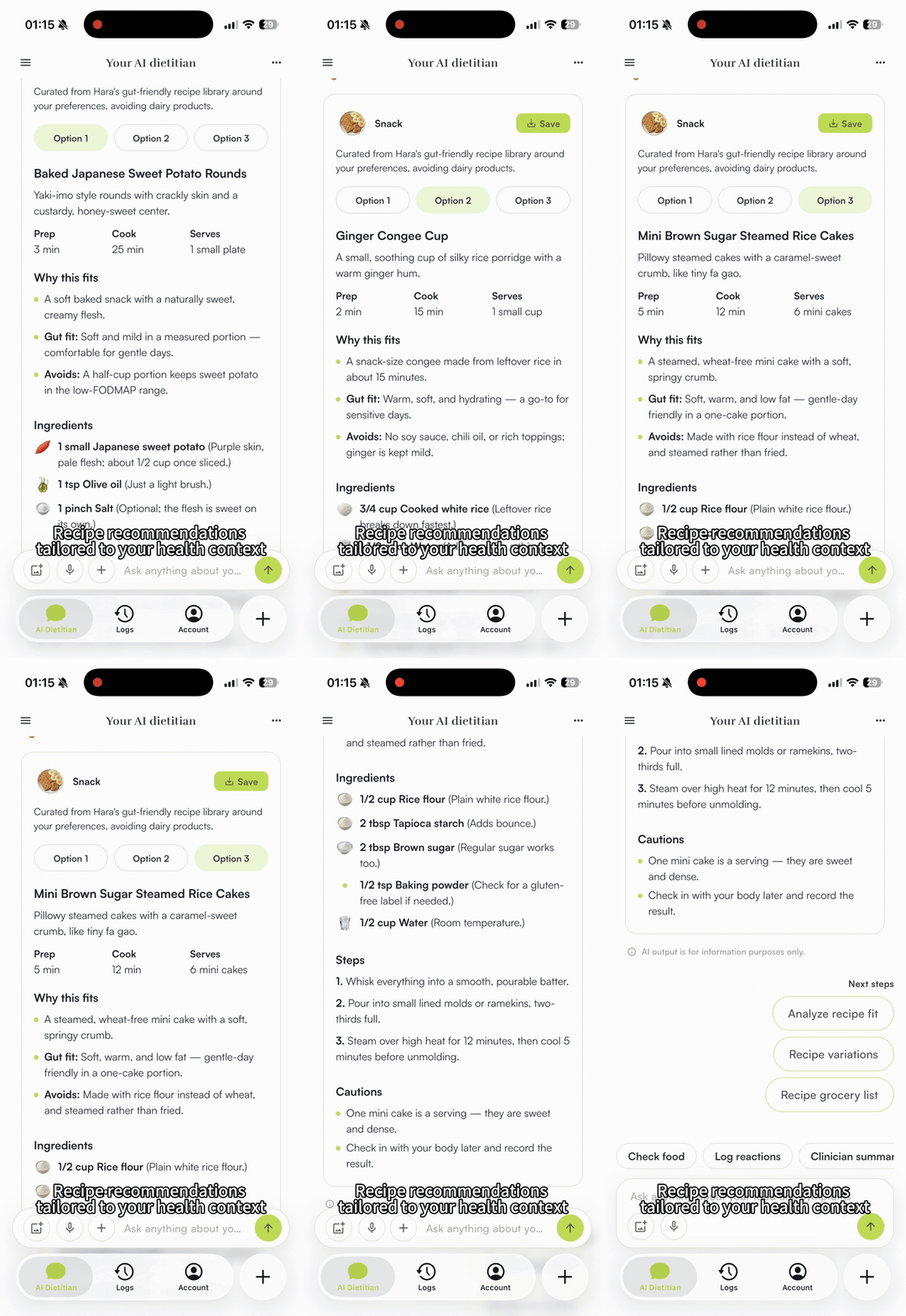
Billy can ask for recipe ideas that match his preferences and logged experience, then request a grocery list for the options he chooses. The suggestions remain ideas he can adapt alongside his care plan.
For someone with IBS, a different question might be: “Compare the portions and sauces in my past lunches, then suggest a meal-prep option for tomorrow.” The connected workflow is similar; the condition and care needs are not interchangeable.
Explore Hara for Crohn’s and UC diet management or Hara for IBS diet management for audience-specific examples.
Connect the record to your care team
Reports and patient-approved Care Portal sharing can put meals, reactions and daily context in front of a dietitian or clinician. The professional reviews the available record and decides what it means for care.
See the workflow for dietitians, clinicians and care teams, or prepare your questions with our food and symptom diary guide.
What the workflow cannot establish
A food and symptom association does not prove a cause. Food tolerance and intestinal inflammation are different questions; the Crohn’s & Colitis Foundation explains that symptom-triggering foods do not necessarily cause inflammation.
Hara does not diagnose a flare, prescribe treatment or replace medical monitoring. Discuss significant symptom changes or nutritional concerns with your clinical team. For IBS, dietary changes should be personalized with professional guidance.
Frequently asked questions
What is agentic AI for diet management?
It is AI that connects steps around an everyday food task. Hara combines checking food, logging reactions, retrieving personal history and planning meals, with the user reviewing the resulting guidance.
Does comprehensive data mean Hara has all my health information?
No. It refers to the meals, symptoms, check-ins and preferences you choose to share, including sleep and stress when recorded. Missing records and incomplete context limit the answer.
Can Hara act as my dietitian or clinician?
Hara is an AI app, not a registered dietitian or clinician. It supports food decisions and record organization; qualified professionals remain responsible for clinical assessment and treatment.
Start with one food question.
Give Hara the context you want considered, then keep a record you can use at the next meal.