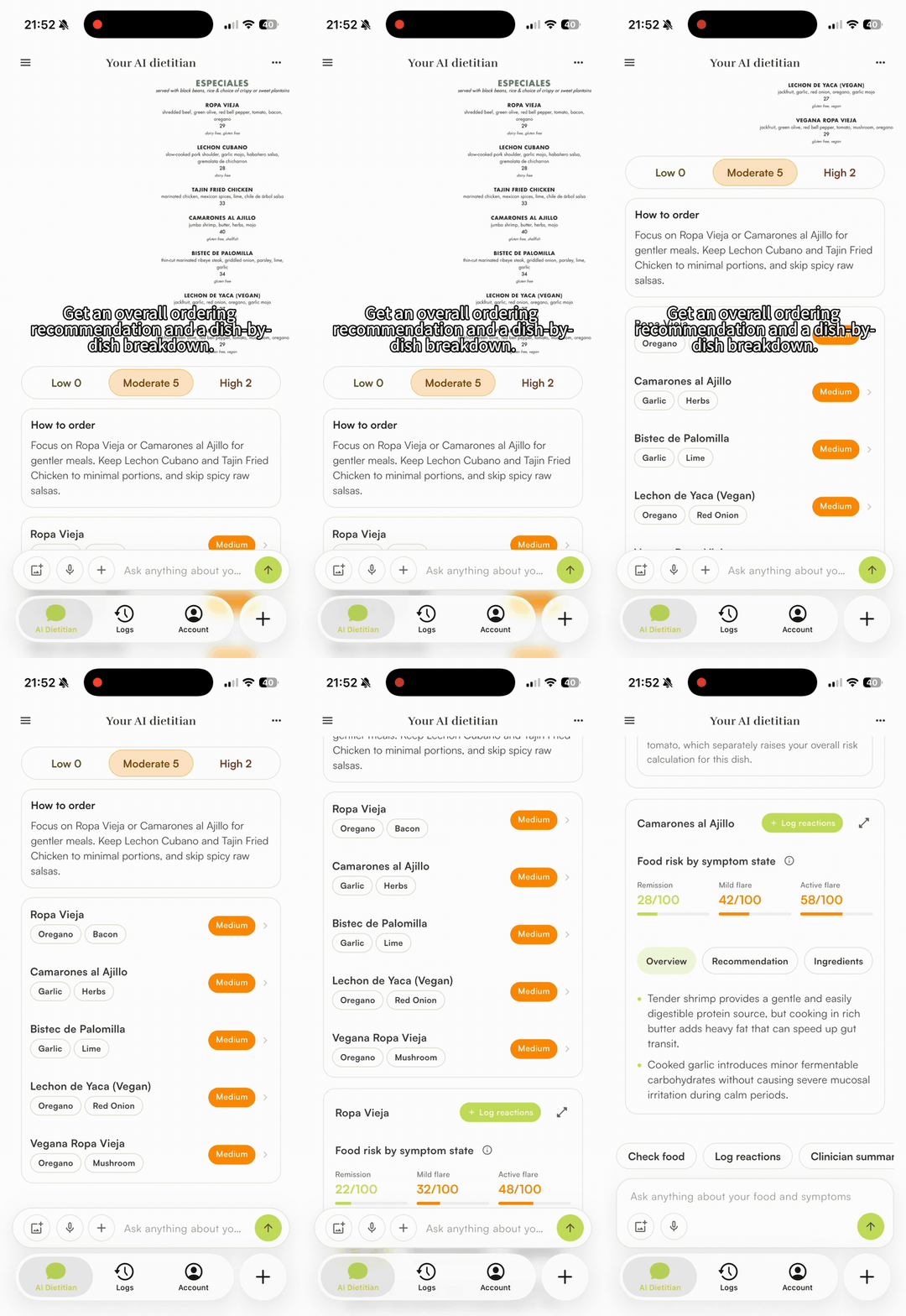
Compare the menu
Check a meal, label or whole restaurant menu. Ask about ingredients, preparation and possible modifications alongside your recorded preferences and reactions.
“Compare these dishes with meals I’ve logged before.”
Hara for Crohn’s disease & ulcerative colitis
Hara is an AI dietitian app for Crohn’s disease and ulcerative colitis diet management. Its agentic AI connects food checks, reaction logging, personal-history retrieval and meal planning. It uses comprehensive data from the meals, symptoms, daily check-ins and preferences you share to help with your next food decision.
Informational food guidance. Your clinical team directs IBD treatment.
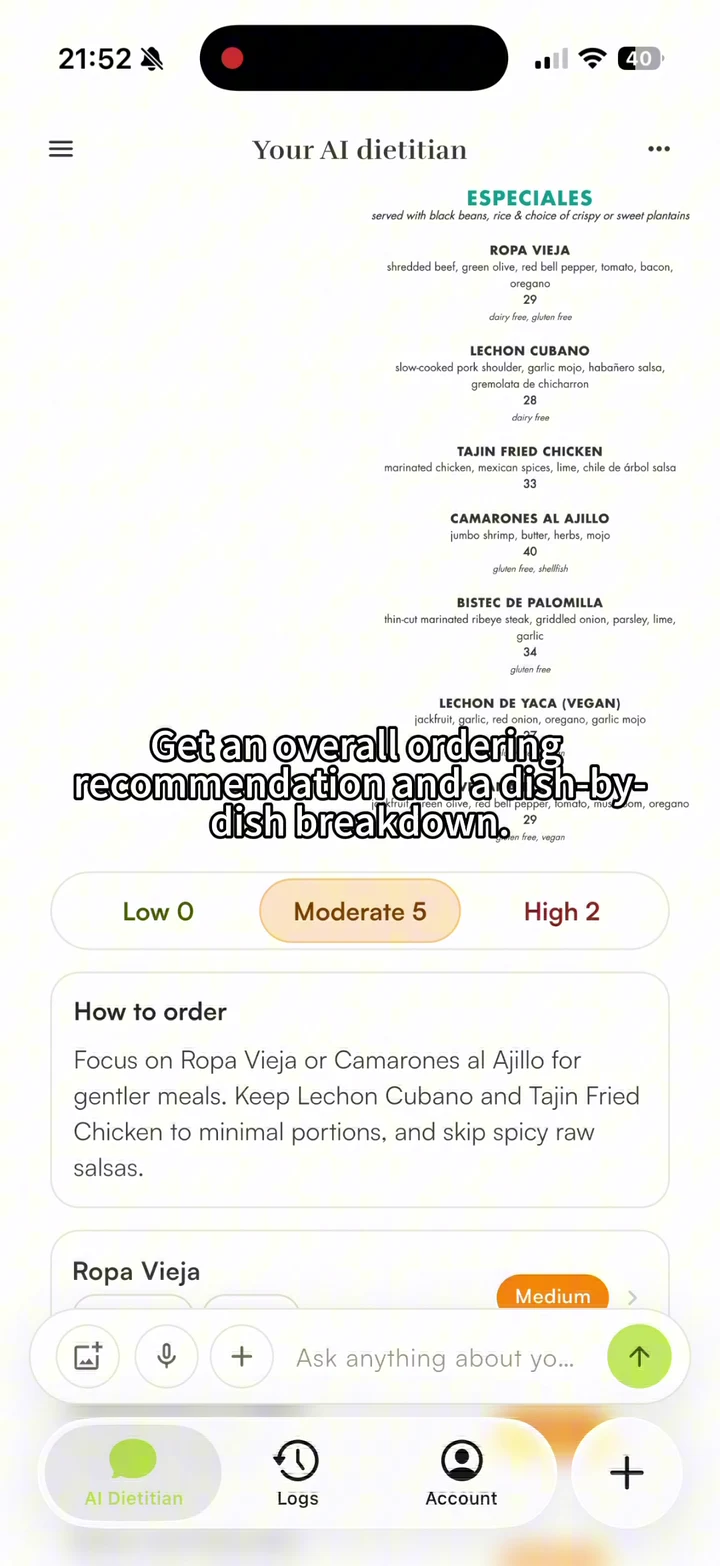
Food decisions, connected.
From a menu today to a more useful conversation at your next visit.
Everyday IBD diet management
Living with Crohn’s disease or ulcerative colitis creates different food questions across the week. Hara helps bring the relevant details into each one.
Check a meal, label or whole restaurant menu. Ask about ingredients, preparation and possible modifications alongside your recorded preferences and reactions.
“Compare these dishes with meals I’ve logged before.”
Log the meal, portion and your reported reaction. Include timing, severity and days when you felt fine so the record contains more than difficult meals.
“I had a small bowl at lunch and felt fine afterward.”
Ask Hara to retrieve relevant history. Review similar meals, symptom notes and daily context before treating a single experience as a pattern.
“What happened the last few times I ate this?”
Use your food preferences and logged experience to ask for recipe ideas, meal-prep options and a grocery list you can review and adapt.
“Suggest dinner options using foods I’ve tolerated.”
Inside the Hara app
Keep daily context, prepare a useful summary and turn your food preferences into meal ideas.
Swipe to explore. Tap any screen to enlarge.
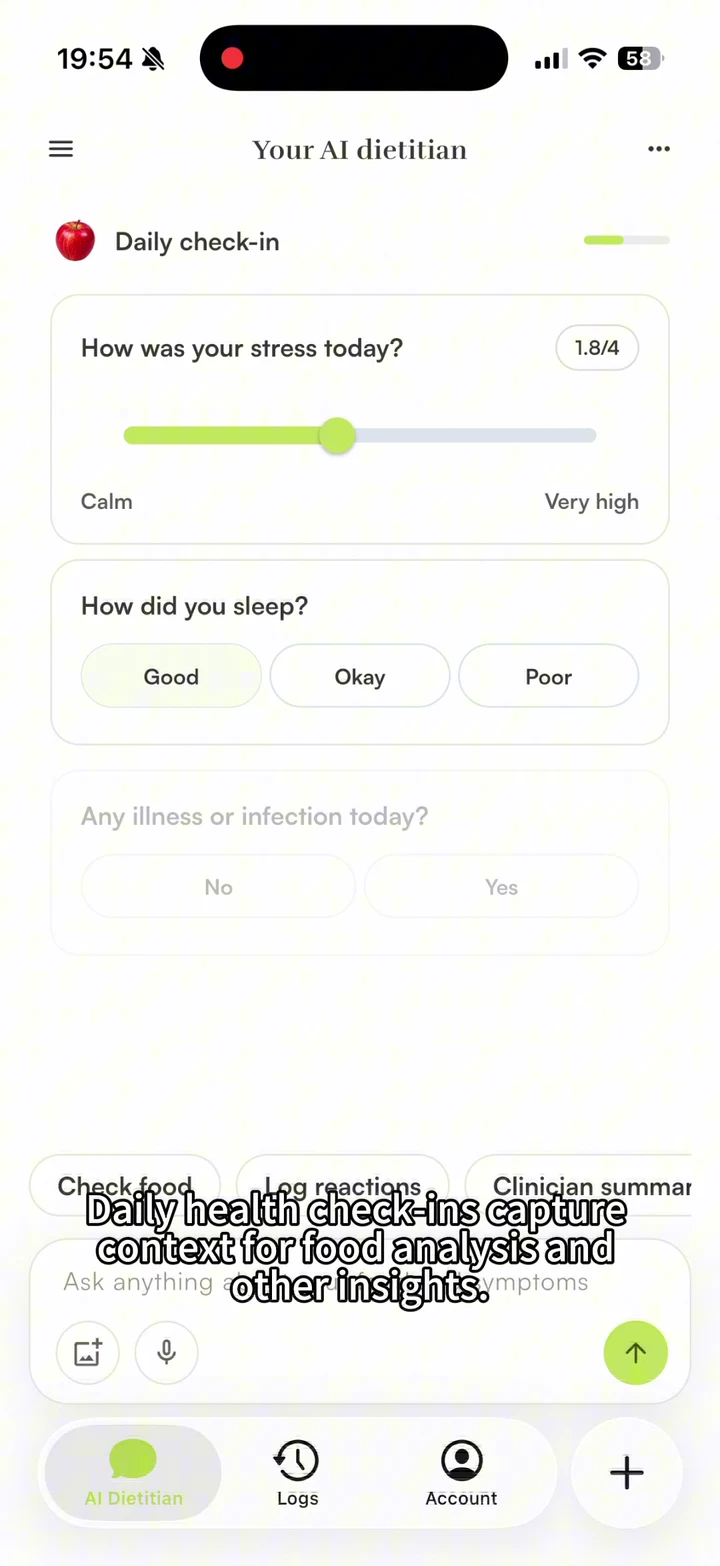
Record sleep, stress and other context alongside your meals.
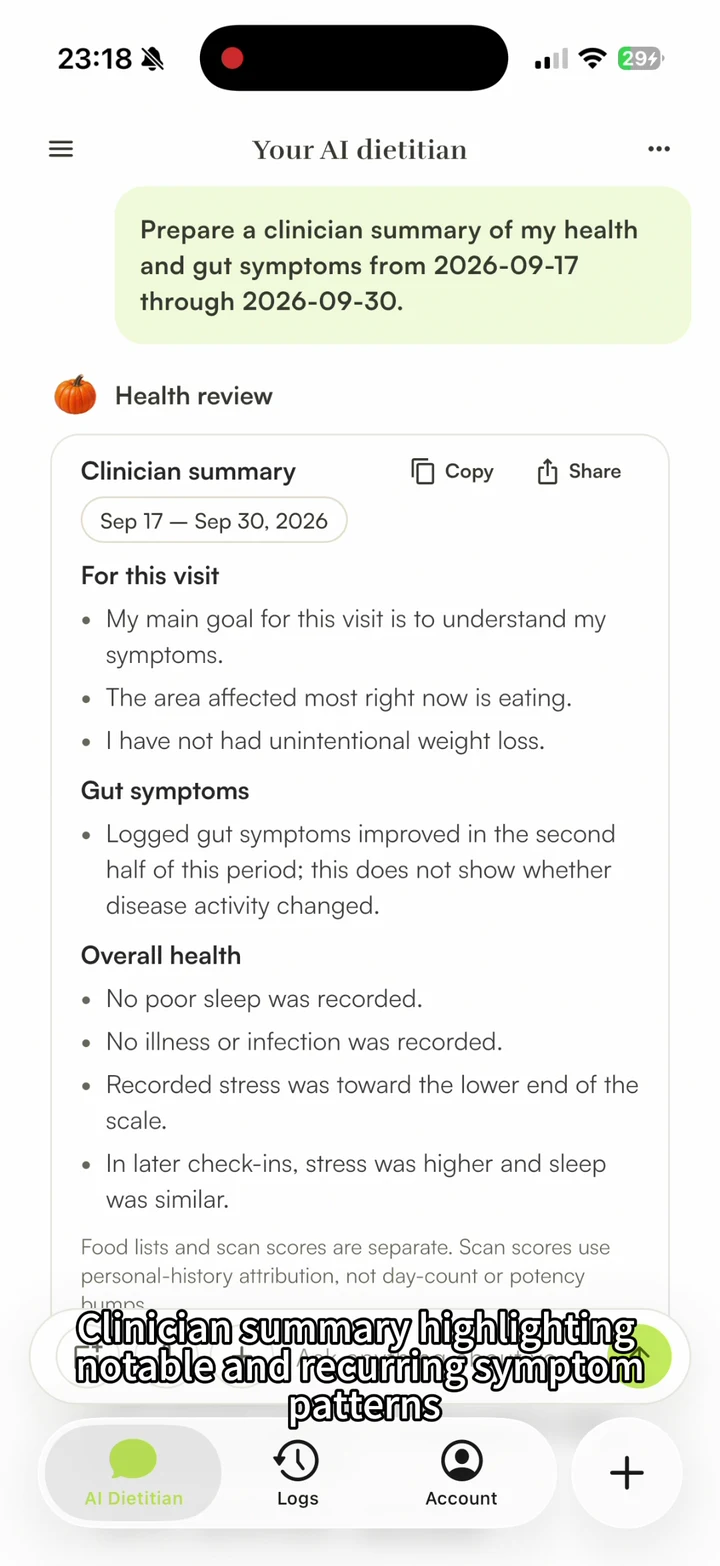
Bring a draft summary and source records to your care team.
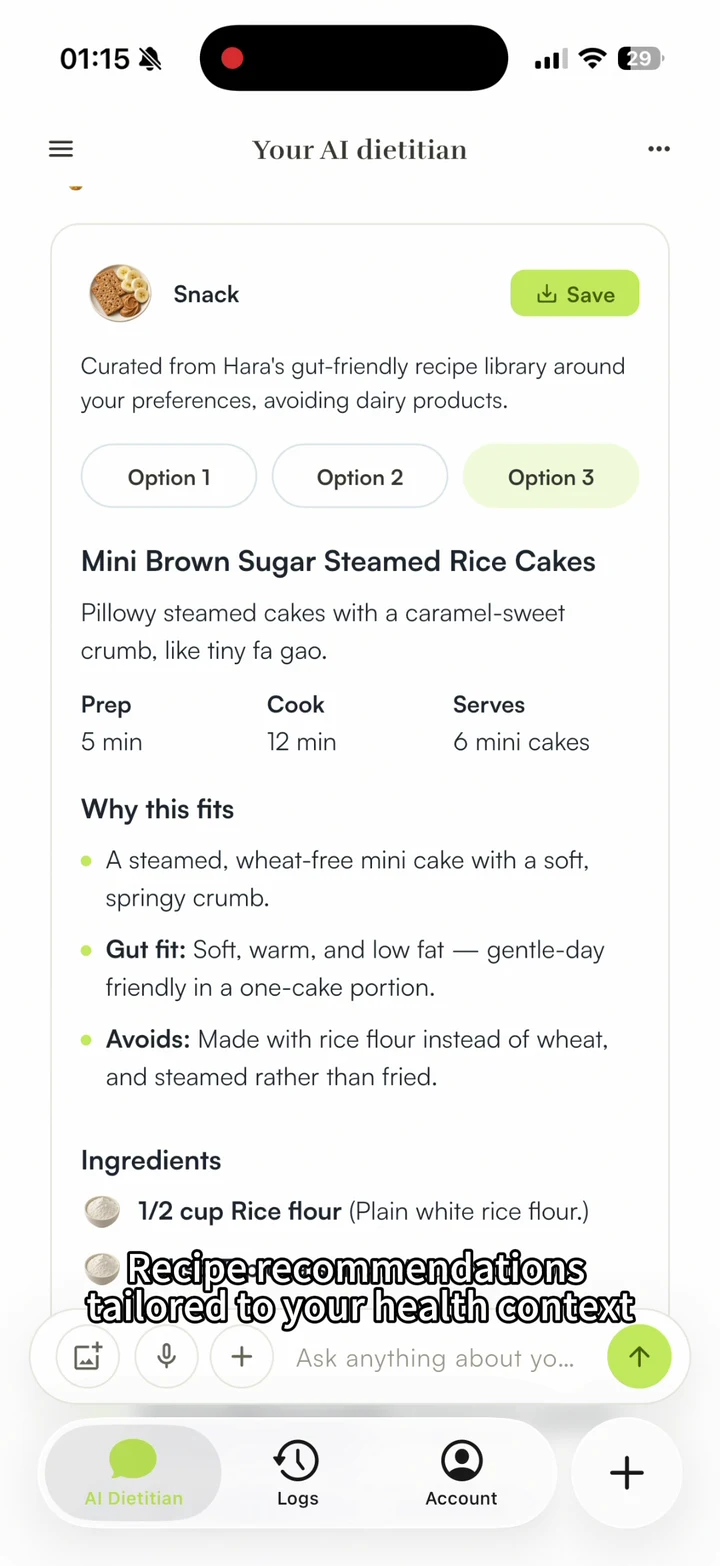
Ask for recipe options that reflect your preferences.
Screens from Hara’s product demo. Tap a screen to enlarge. Examples illustrate the app workflow, not clinical results.
Comprehensive data, in context
Comprehensive data means the information you choose to record in Hara: meals and portions, symptoms and timing, daily check-ins, sleep, stress and dietary preferences.
That context can inform food questions and help you prepare for a care conversation. Missing records still mean missing information.
See how Hara’s agentic AI connects the steps →For your next appointment
Use Hara’s reports and patient-approved Care Portal sharing to bring meals, reactions and check-ins to a dietitian, clinician or care team. Specific records can make it easier to explain what you noticed and ask what to do next.
Nutrition plans for IBD should be individualized with your clinical team, as the Crohn’s & Colitis Foundation explains. Symptom tolerance does not establish whether intestinal inflammation is controlled.
Prepare a food and symptom diary for your GI →A few useful answers
Hara can help you compare foods, record reactions, retrieve past meals and plan what to eat next using the information you share. “AI dietitian” describes the app’s food-guidance role; it is not a registered dietitian and does not diagnose or treat IBD.
No. Logged symptoms and food estimates do not measure intestinal inflammation or confirm a flare. Bring new or worsening symptoms to your clinical team; use Hara to organize the observations you want to discuss.
A diary stores what happened. Hara also connects those records to a new task: comparing a menu, retrieving a past reaction or suggesting a meal plan. Our IBD diet management app comparison explains the feature differences.
Hara supports sharing through the Care Portal when you choose to connect and share. Professionals can review the information made available to them; follow-up messaging depends on whether it is enabled.
Check a meal, record how you felt, and build a history you can use again.