Add preparation and portion
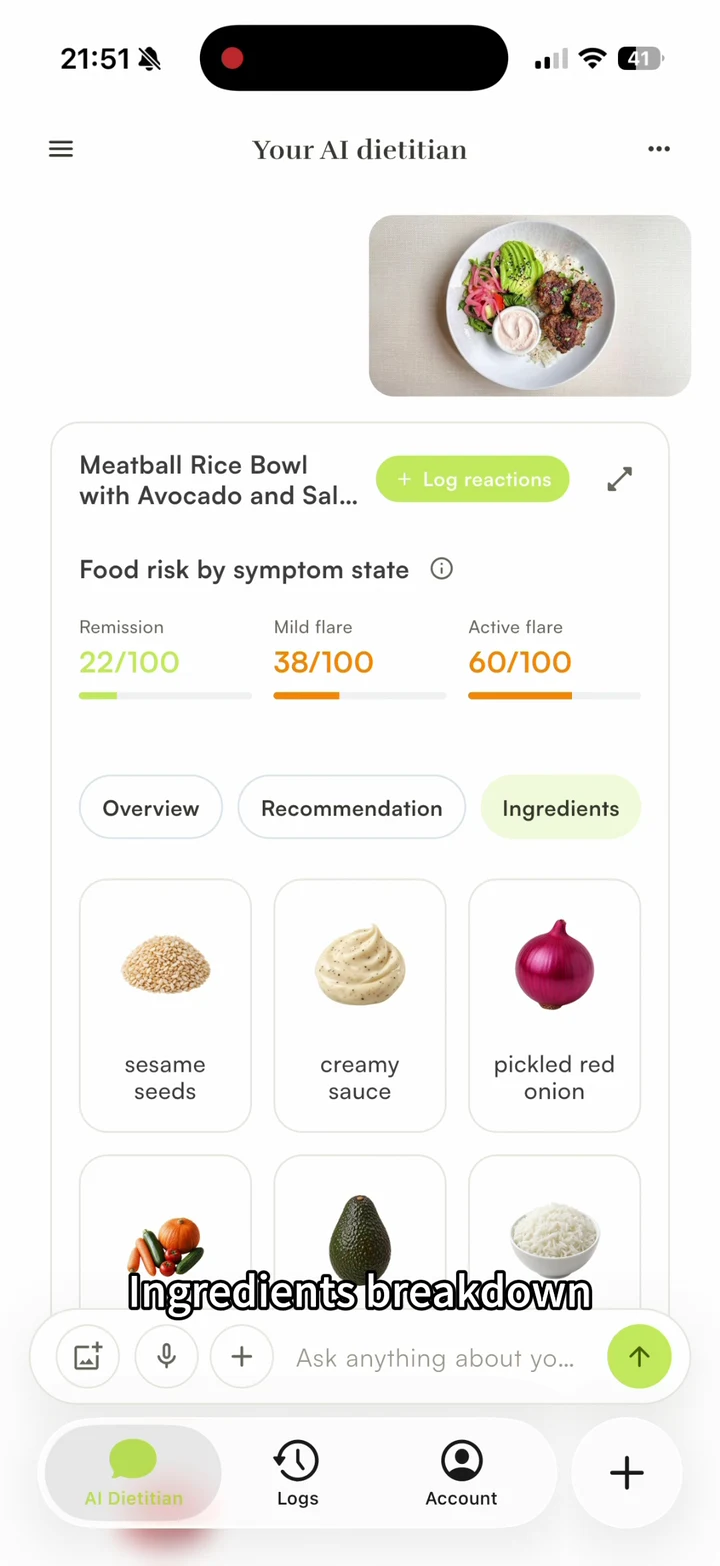
Check a meal or menu, then correct the ingredients and describe how the food was prepared and how much you ate. A photograph alone cannot capture every detail.
“Cooked and peeled, with a small serving.”
Hara for Crohn’s disease
By Hara Health · Updated
Quick answer: Hara is a Crohn’s disease diet app that connects meal checks, food and symptom tracking, and your past meal experiences. Use it to review ingredients, portions and preparation, then bring a clearer record to your dietitian or IBD team. An AI food check cannot assess a stricture, nutritional deficiency or disease activity.
Food guidance should follow your individual Crohn’s care plan.
A practical workflow
For a Crohn’s food question, “vegetables” or “chicken” leaves a lot out. Your record can capture the preparation, texture, amount eaten and any instructions your team has already given you.
Check a meal or menu, then correct the ingredients and describe how the food was prepared and how much you ate. A photograph alone cannot capture every detail.
“Cooked and peeled, with a small serving.”
Tell Hara about food instructions you want considered, then check any suggestion against your actual clinical plan. Ask your team when a recommendation is unclear.
“Compare options within the plan my dietitian gave me.”
Record reported symptoms and timing, along with meals that caused no noticeable symptoms. Include daily context when available.
“This portion felt fine; the larger one was different.”
Retrieve earlier meals and prepare questions about recurring experiences or a shrinking food list. Share selected records for professional review.
“Which details would help explain these repeated experiences?”
On a small screen, scroll the table sideways.
| Situation | Useful app record | Ask your care team |
|---|---|---|
| A known bowel narrowing or a prescribed texture change | Meal preparation, texture and the instructions you were given. | Which foods and textures fit your specific plan; an AI score cannot clear a food. |
| Eating differently after surgery | What you eat, portions and symptoms you choose to record. | How your surgery affects nutrition and what follow-up is needed. |
| Less appetite or fewer tolerated choices | Changes in meals, portions and the questions you want answered. | Whether nutrition assessment or other evaluation is needed. |
| Different reactions to similar meals | Timing, preparation, amount and symptom-free examples. | Whether there is enough evidence to change anything. |
Keep the context
Some people with Crohn’s need specific nutrition advice for a stricture or after surgery. Crohn’s & Colitis UK explains that a bowel narrowing may require food changes; those changes should be discussed with the care team. This is not a reason for everyone with Crohn’s to avoid the same foods.
Hara helps organize your meals and questions. It does not prescribe elimination diets, enteral nutrition or a stricture-safe food list. Do not use an AI recommendation to override instructions from your clinician or dietitian.
Read how to prepare a food diary for your GI visit, or explore our dietitian follow-up workflow.
Useful answers
Meals, portions, preparation, reported symptoms and timing are useful starting points. Include experiences without noticeable symptoms and any food instructions from your care team. Hara helps connect these records to later food questions.
No. A meal photo or AI food estimate cannot assess a bowel narrowing or guarantee that a food is suitable. Follow your IBD team’s individual food and texture instructions.
Hara emphasizes menu, meal-photo and label checks connected to personal history and meal ideas. Crohn’s Food Tracker, listed on the US App Store as Crohn’s Food & Symptom Tracker, describes food and symptom logging, association insights and PDF reports. See our linked comparison for current sources and limitations.
No. Recorded symptoms cannot establish inflammatory activity, nutritional status or remission. Use the records as context for clinical follow-up, not as a substitute for assessment or treatment.
Check a meal, correct the details, and keep a history you can discuss.